A New Pathway to Healing: Reflections from the “Understanding the Impact of Domestic Abuse Survivor Programmes” Event
By Alice Pavlou
Introduction
On Thursday 10th July, members of Nistawi Women were honoured to attend an inspiring event hosted by Nottingham Trent University. Titled “Understanding the Impact of Domestic Abuse (DA) Survivor Programmes”, the event brought together researchers, charities, and local community workers to share knowledge, raise awareness, and discuss a pioneering new survivor programme: ‘Steps to Freedom’.
The event was led in collaboration with Nottingham Central Women’s Aid, a grassroots organisation committed to supporting women and children affected by domestic abuse. Attendees included other local charities such as Al-Hurraya and Imara, along with members of Nottingham’s local crime force.
Steps to Freedom
At the heart of the event was the launch of Steps to Freedom, a new trauma-informed, person-centred programme piloted by Nottingham Central Women’s Aid and co-designed with survivors of domestic abuse, to provide support to all women above age 16 who have been impacted by domestic abuse.
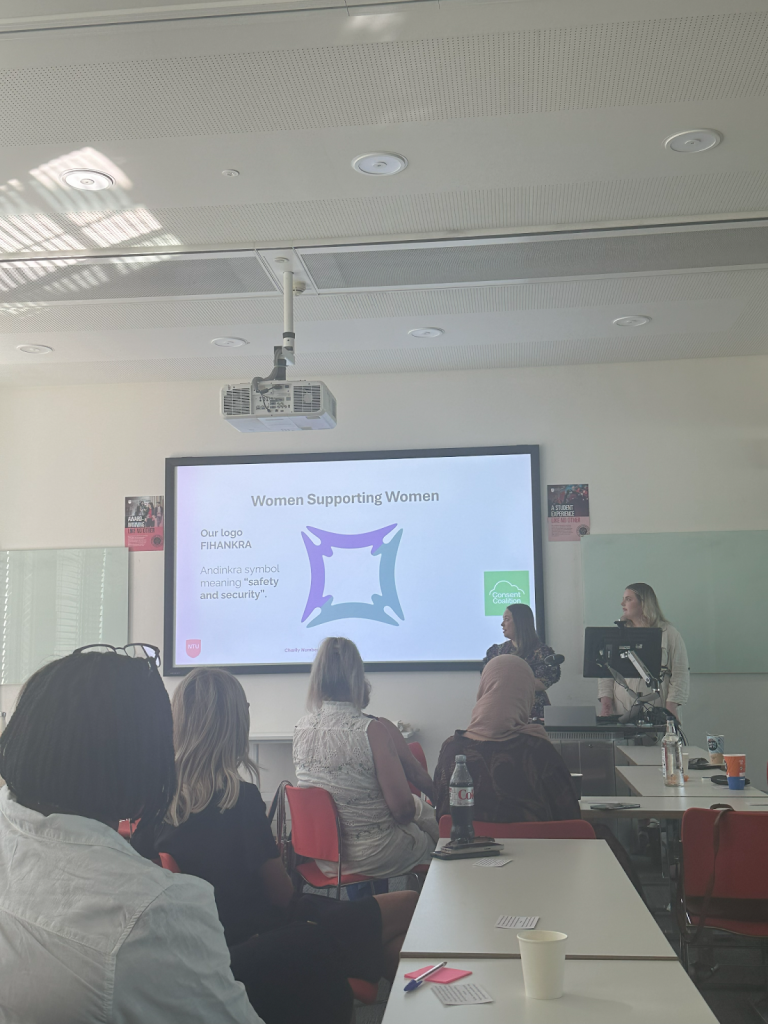
Nottingham Central Women’s Aid developed this pilot initiative to address key gaps in existing support services, noted as limited long-term support, underfunding, and the lack of inclusivity for women with diverse experiences.
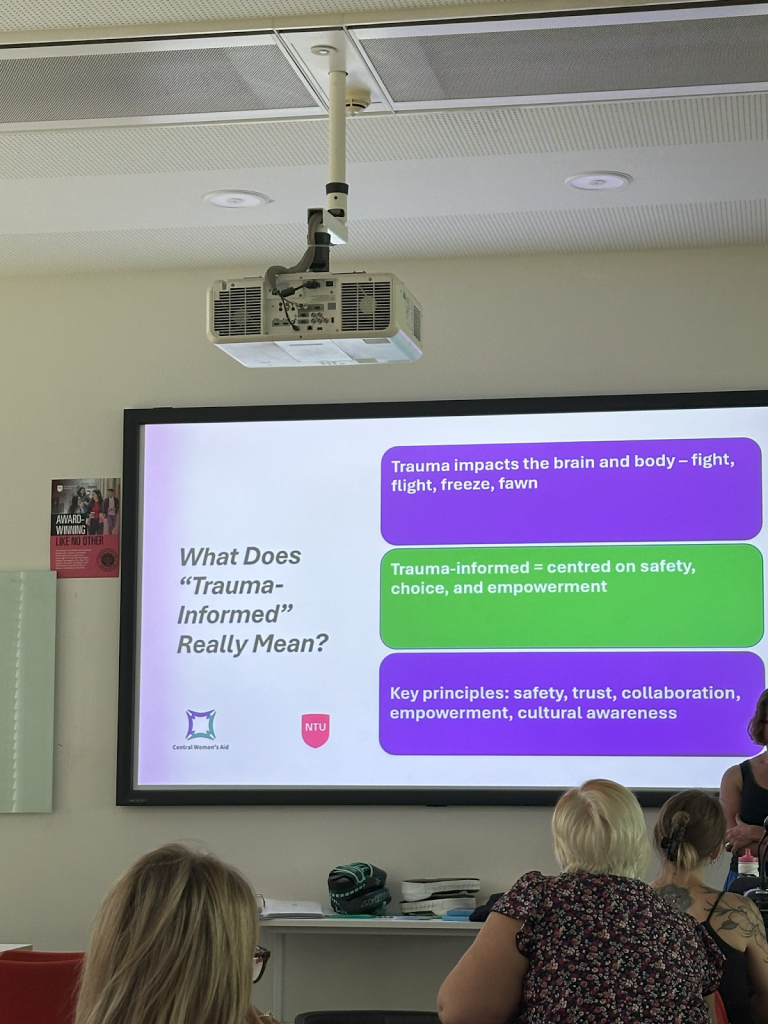
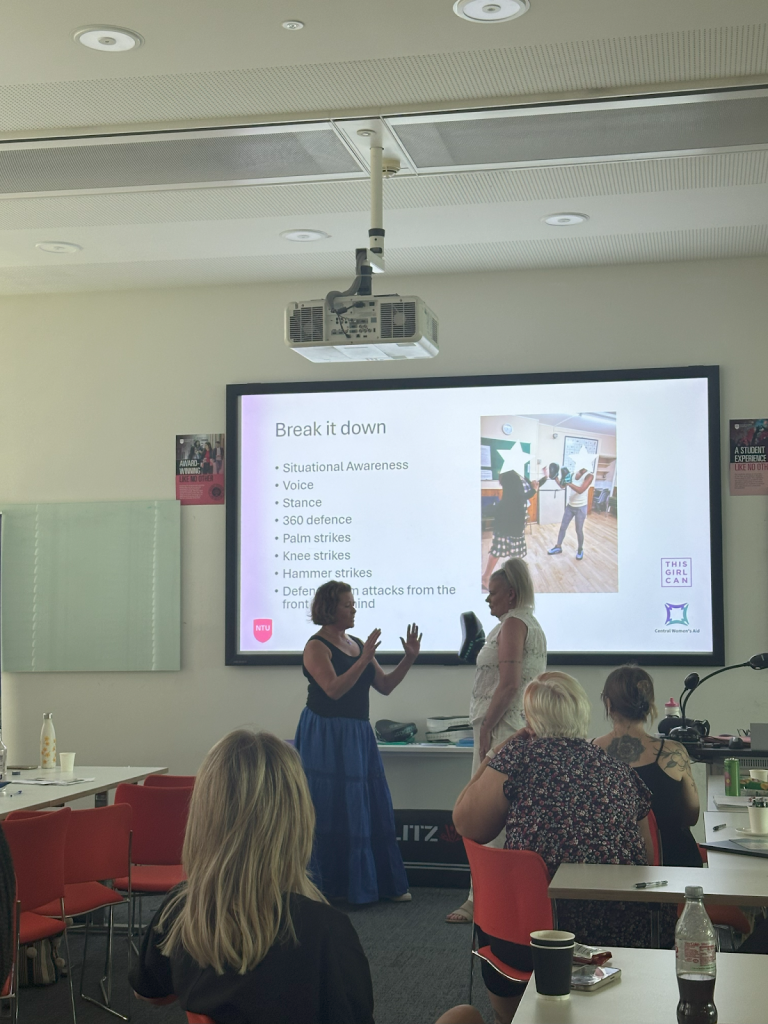
The overview of the programme involved an outline of its 12-week sessions and unpacking key terms related to domestic abuse survivor programmes. They prompted us to unpack questions such as what we think “trauma-informed” really means, which made the session personal and engaging.
How the programme works
Sessions are designed to be accessible, interactive, and therapeutic, using creative methods such as art workshops, colouring books, and collaborative group activities. One of the programme’s most powerful aspects is its emphasis on survivor empowerment. Activities are person-centred, with special care taken by the programme facilitators to provide specific support to each individual on the programme. For example, the programme invites survivors to define what a “survivor” is themselves. This makes the programme deeply personal and validating.
What sets Steps to Freedom apart from other survivor programmes is its commitment to intersectionality. Co-designed with trauma survivors from various different backgrounds – including Black and ethnic minority women, LGBTQ+ survivors, and women with disabilities or specific learning needs – it was clear that the programme consciously includes the voices and needs of women from different backgrounds.
Making Empowerment Accessible for All
Another highlight of the Steps to Freedom programme is its universal language when describing what abuse may look like. This ensures the resources speaks to survivors of all forms of abuse: not just those from romantic partners, but also family, professional, or honour-based violence. Honour-based abuse/violence is a huge issue in the UK. It refers to abuse in the form of punishment against someone believed to have brought shame on their family or community and can involve control, violence, or coercion, and includes crimes of forced marriage and female genital mutilation (FGM). In the UK alone, 2,905 cases were recorded between 2022 and 2023 – but as many cases go unreported, the true number is likely much higher.
By paying attention to the diversity of women’s experiences and making the programme accessible through language and learning materials, the programme offers a genuinely inclusive approach to DA and trauma recovery – presenting a huge step for the development of survivor programmes.
Hands-On Learning: Activity Workshops
As part of the event, we were able to experience two sessions from the Steps to Freedom programme. The first was a “weakness and growth tree” activity, where women mapped out personal challenges and reflected on their growth. The second was an art collage workshop, using symbols of strength and freedom to unlock creativity and encourage self-expression.
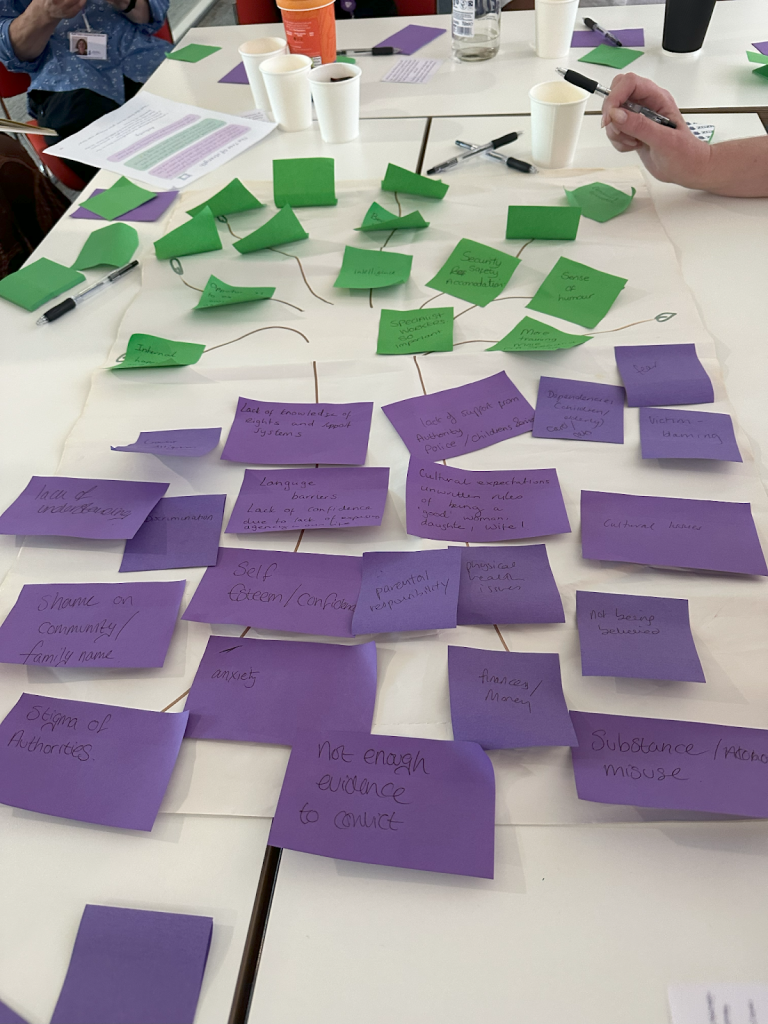
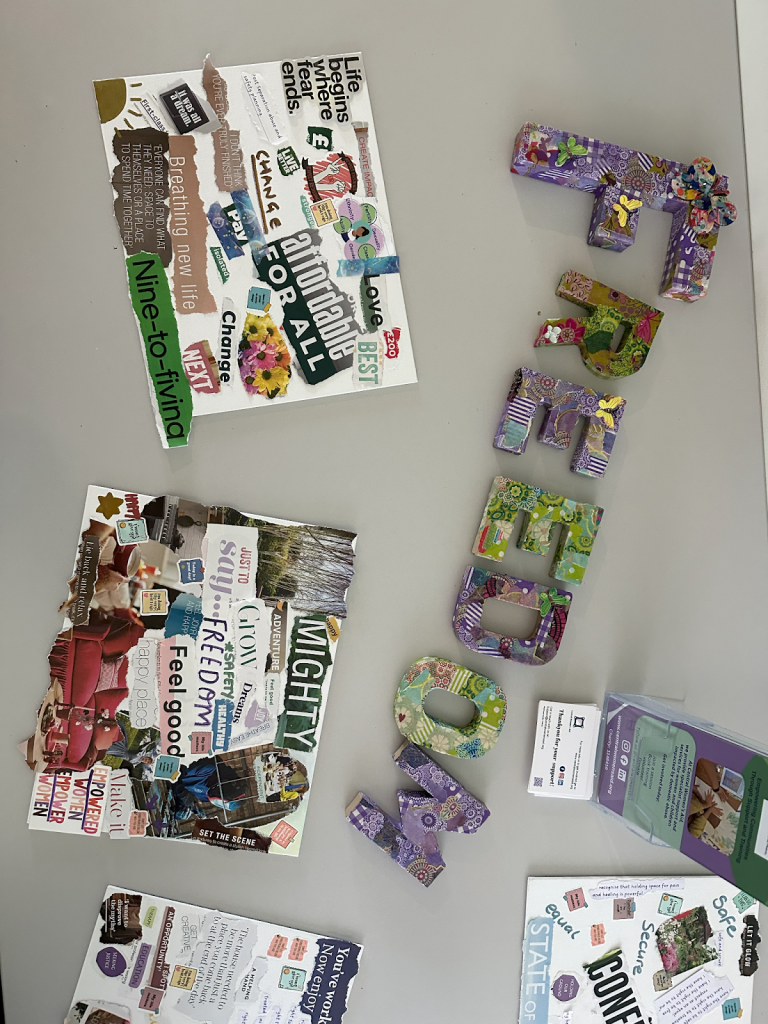
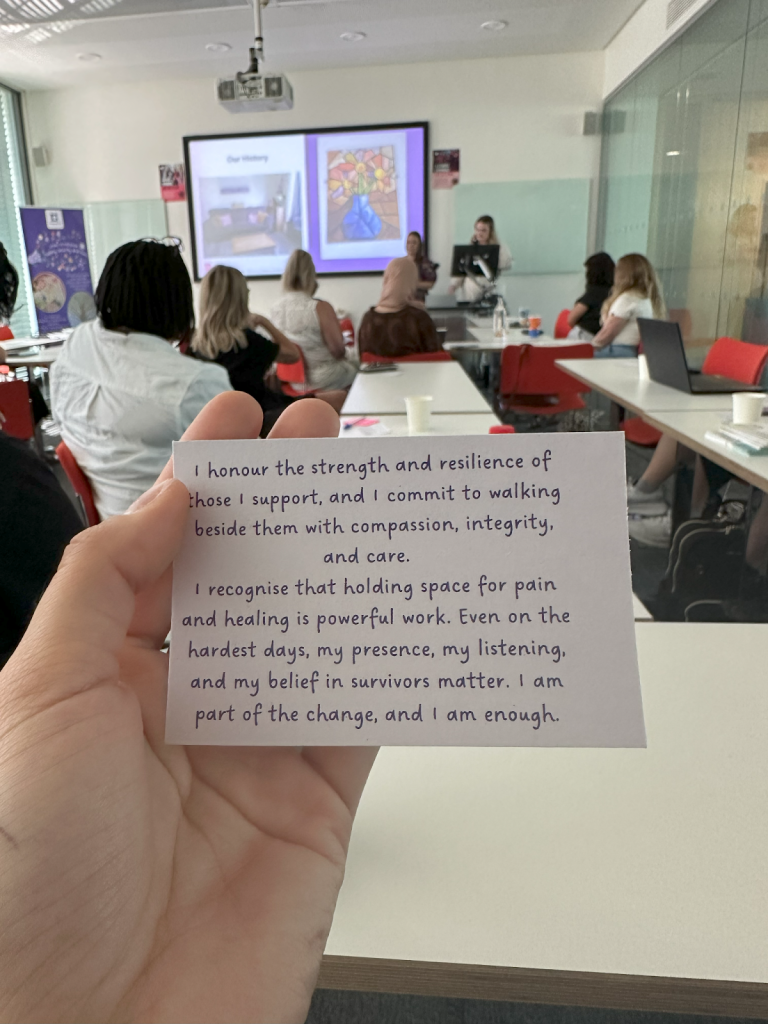
While we were busy getting our hands full with the activities, we were surrounded by affirmations of strength, healing, and encouragement – providing a constant sense of comfortability and empowerment as we bonded with each other.
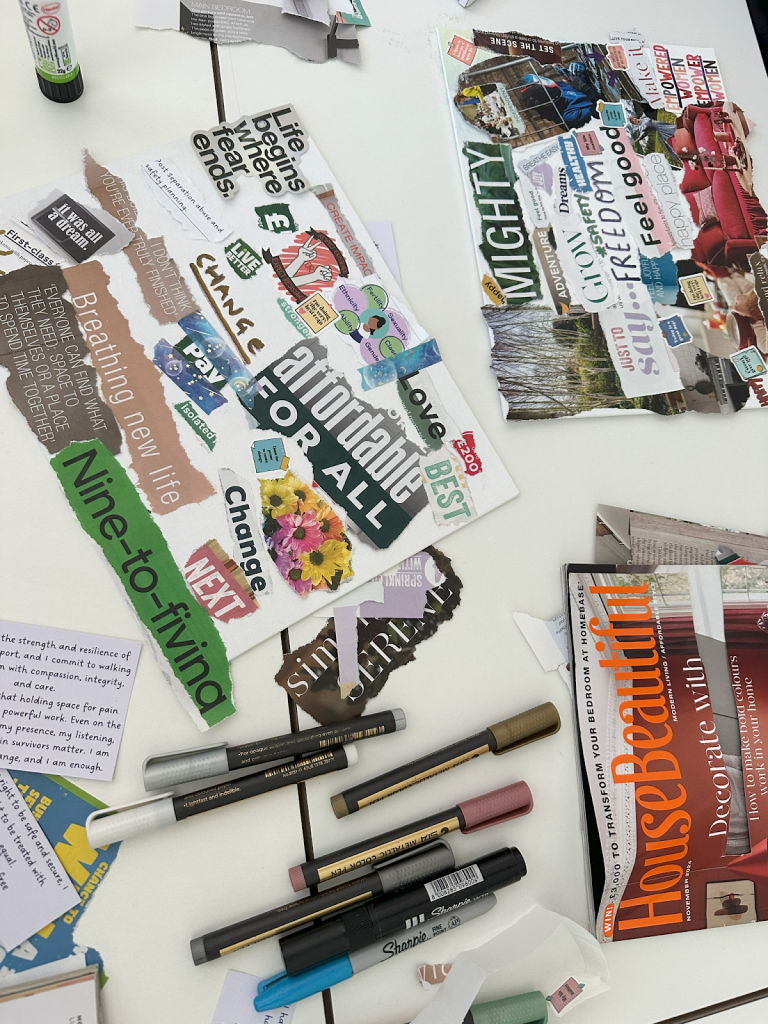
Both activities were symbolic, inclusive, and engaging, designed to meet a wide range of needs, including neurodiverse participants. The group environment in each activity created a strong sense of community and connection. We were able to bond over our shared experiences, and we left with a sense of community and familiarity with each other.
Nottingham Central Women’s Aid developed this pilot initiative to address key gaps in existing support services, noted as limited long-term support, underfunding, and the lack of inclusivity for women with diverse experiences.
The overview of the programme involved an outline of its 12-week sessions and unpacking key terms related to domestic abuse survivor programmes. They prompted us to unpack questions such as what we think “trauma-informed” really means, which made the session personal and engaging.
Why Steps to Freedom Matters
The event closed with a powerful research-led evaluation from Nottingham Trent University, offering deep insight into the real-world impact of Steps to Freedom.
From conducted focus groups and interviews, the programme was described as “life-changing,” with several women sharing that it was the first time they truly felt seen, heard, and supported.
The researchers described the focus groups as “highly emotional”, as the women described how the programme had helped them heal from the trauma of DA. One woman shared how she didn’t feel as if she had a voice before the programme, and after being educated on her legal rights as well as feeling empowered through the community support from other women, finally felt like she had discovered her voice.
The evaluation also pointed to areas where the programme could grow, including:
- More 1-to-1 support for women
- Resources made available in multiple women’s aid languages
- A wider range of case studies reflecting diverse lived experiences
Nottingham Women’s Aid were happy to make adjustments to the programme to support these wishes. They clearly valued the opinions of the women who had taken the programme.
Looking Ahead
Events like this are a vital reminder of the power of community, compassion, and co-creation in tackling domestic abuse. ‘Steps to Freedom’ isn’t just a programme: it’s a model for inclusive, survivor-led healing.
At Nistawi Women, we’re excited to continue these conversations and build on the connections made. We’ll be reaching out to Nottingham Central Women’s Aid to explore opportunities to share this story on their platform and discuss future collaborations – particularly in areas where we can support women impacted by honour-based abuse and FGM. Together, we can help more women take those first, courageous steps toward freedom.